

The Cross-Pressures of the Internationalization of Chinese Higher Education
The internationalization of Chinese higher education is closely linked to the country’s economic, scientific, and foreign policy objectives, as well as its ambition to become a global superpower in education and technology. Internationalization is directed centrally by the party-state and implemented through multiple ministries, regional administrative actors, and higher education institutions together with their Communist Party organizations. These efforts are characterized by a constant balancing act between international openness and party-state control. In practice, China systematically seeks to attract top foreign talent and leading universities to the country, while also strengthening its own institutional presence abroad through branch campuses and similar initiatives. However, China’s attractiveness as a higher education partner still remains overshadowed by Western higher education systems due to language barriers, geopolitical tensions, and concerns related to research security.
The internationalization of Chinese higher education has advanced rapidly during the 21st century. It is strongly guided by the party-state and tied to broader economic, scientific, and foreign policy goals. China aims to position itself as a global power in education, research, and technology in the near future. Particularly within the framework of China’s so-called Belt and Road Initiative, educational and research cooperation with countries of the Global South has expanded. In addition, Chinese higher education actors and organizations promoting internationalization have become increasingly visible in international education networks and events. Despite these investments, China’s international appeal still lags behind Western education systems in many respects. Globally, Chinese universities have not traditionally been regarded as equally attractive or high-quality as many Western systems, and the language barrier has further complicated internationalization. At the same time, technological and geopolitical competition between the United States and China has increased suspicion toward international research collaboration, especially in strategically sensitive fields, both abroad and within China itself. As a result, China’s internationalization goals and practical operating models in higher education often appear contradictory.
Responsibility for the internationalization of higher education in China is not concentrated in a single centralized actor; instead, tasks are divided among several ministries and their subordinate organizations. Key actors include the Ministry of Education and organizations under it such as the China Scholarship Council and the China Service Center for Scholarly Exchange. At the local level, provincial and municipal Foreign Affairs Offices (FAOs) in particular support the internationalization of universities, companies, and other regional actors while ensuring that activities remain aligned with the strategic goals of the party-state. In practice, support from FAOs often facilitates the administrative permit and approval processes required for cooperation projects. At the level of individual universities, internationalization continues to be implemented within a rather hierarchical and centrally guided framework. Responsibility for international affairs usually lies with a university’s international office or a similar unit. In addition, university Communist Party committees hold a central role in strategic decision-making. Consequently, international cooperation initiatives within the higher education sector ultimately become subject, in one way or another, to evaluation and approval by the party-state.
Chinese students continue to study abroad in large numbers, although this trend appears to have stabilized in recent years. China’s slowing economic growth, security concerns generated by great-power competition, and the rapid qualitative development of Chinese universities have reduced interest in foreign degrees. At the same time, student mobility has undergone qualitative changes. Traditional Anglo-American destination countries have lost some of their appeal, and students are increasingly seeking alternative educational pathways that allow them to stand out in China’s increasingly competitive labor market. Student mobility toward China, meanwhile, has remained relatively limited. Although the decline caused by the COVID-19 pandemic has partly recovered, China has not, at least so far, succeeded in branding itself as a global hub for international student flows comparable to the United States or the United Kingdom. Nevertheless, signs of change are visible. In recent years, China has grown in popularity as a study destination particularly among ethnic Chinese students and students from Southeast Asia, South Asia, and Russia.
China has also centrally developed recruitment programs abroad aimed at attracting already-established top experts and researchers. These programs—perhaps best known through the so-called Thousand Talents Program (Qianren jihua)—are implemented at the state, regional, and university levels. Their execution also involves Chinese diplomatic missions abroad and organizations connected to the Communist Party’s so-called united front activities, including some Chinese student associations operating overseas. The programs aim to attract experienced researchers and specialists to China by offering competitive funding, high salaries, and, in many fields, relatively free opportunities for research work. In practice, the programs have been particularly successful in attracting Chinese returnees and ethnically Chinese foreign citizens. Especially in the so-called Western countries, these programs have at times faced strong criticism due to concerns related to transparency, technology transfer, and research security.
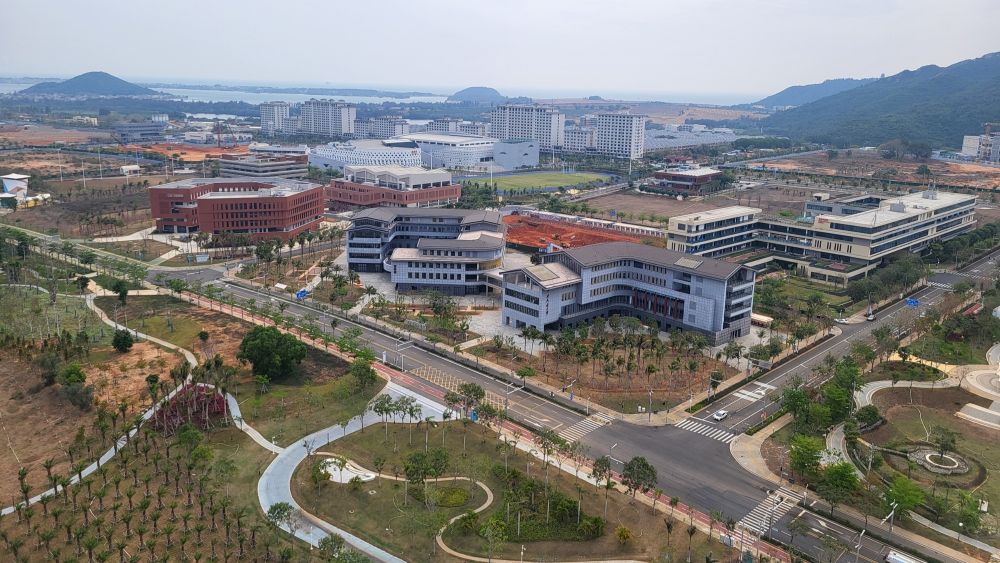
China’s objective, however, is not only to attract individual experts but also to increase the institutional presence of foreign universities within the country. Traditionally, international cooperation has been implemented through double-degree programs, joint research laboratories, and educational imports. In recent years, however, China has sought to reduce the outflow of students abroad and strengthen the position of domestic universities. As a result, implementing mobility-based double-degree programs has become more difficult. In their place, new cooperation models have been developed in which foreign universities are encouraged to establish branch campuses in China in cooperation with local universities. In some cases, regulations have also been experimentally relaxed. For example, pilot projects in the Hainan Free Trade Zone have granted foreign universities greater autonomy in designing teaching and degree structures. The apparent goal of these initiatives is, on the one hand, to bring international expertise and educational resources into China, but on the other hand, to ensure that even international education remains as firmly as possible under the control of the Chinese Communist Party.
China’s internationalization ambitions are also reflected in the growing activity of Chinese universities abroad in recent years. Extensive educational and research cooperation has been carried out particularly with countries of the Global South as part of China’s broader foreign policy and economic objectives. In recent years, however, this cooperation has become more institutionalized: instead of relying solely on double-degree programs, Chinese universities have begun establishing branch campuses and research centers abroad as well, including in Western countries. The first overseas branch campus of a Chinese university was opened in Malaysia in 2015.
Olli Suominen
olli.suominen(at)gov.fi