

India is Building a Global Knowledge Power

As India advances its ambition to become a global superpower, internationalization has become an important cornerstone of its strategy—particularly in science, higher education, and innovation. No longer defined only by its role as a major exporter of talent, India is increasingly positioning itself as a destination for global knowledge, partnerships, and investment. Supported by a powerful diaspora, expanding geopolitical alliances, and ambitious policy reforms, the country is seeking not just to participate in global systems, but to shape them—emerging as a central hub in the world’s evolving knowledge and innovation landscape.
India has a vision to shape global outcomes while accelerating its own transition to a developed nation. India’s economic growth remains among the fastest globally, supported by strong domestic demand and expanding global engagement through trade agreements with key partners, including EU. this is seen to position India not only as a participant in globalization, but as an emerging architect of its next phase.
India’s global journey is deeply linked with its people. With more than 35 million Indians living abroad, the country has the largest diaspora in the world, many of whom hold influential positions across academia, business, technology and policy. These global connections function as bridges—supporting research collaboration, investment, and institutional linkages that reinforce India’s international standing, and provides tools for global understanding.
At home, India’s education system is vast but still evolving. It serves tens of millions of students, yet participation in higher education remains around 30%, with a national goal to reach 50% by 2035. To achieve this, India is increasingly looking outward. The National Education Policy (NEP) 2020 places internationalization at its core, positioning global collaboration as essential to expanding access to higher education, improving quality, and enhancing research capacity and boosting innovations.
This ambition is visible in India’s growing openness to foreign universities. Institutions such as Southampton and Deakin have already established campuses, with many more on the way, signaling a shift toward transnational education ecosystems. Also universities from European Union countries – e.g. Italy and France - are already establishing campuses in India, and Finnish education sector from vocational to higher education level is increasingly interested the same. From Indian perspective these developments are designed not only to improve Indian domestic capacity, but also to reduce the massive outflow of Indian students—over a million of whom study abroad each year.
Yet the real test of India’s internationalization strategy lies in its ability to attract students from abroad. Here, the imbalance is stark: for every 20–30 Indian students studying overseas, only one foreign student comes to India. While programs such as Study in India have begun to improve visibility, the country still captures only a small share of globally mobile students – and hardly any from EU countries.
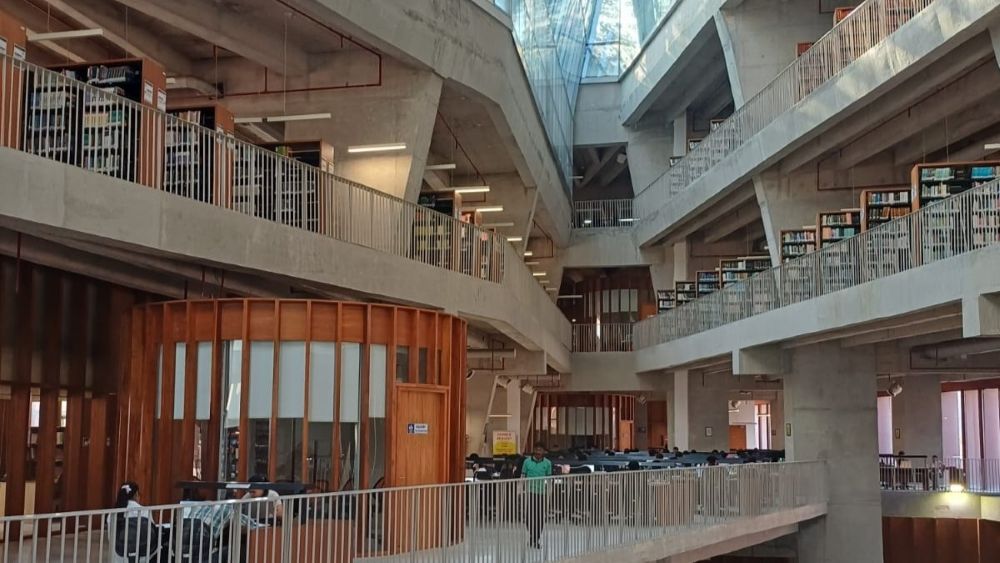
A key reason lies not in policy ambition, but in implementation. A recent Times of India (April 2026) analysis highlights a critical gap: attracting foreign learners requires substantial investment in campus infrastructure and student services, from accommodation and research facilities to international student support systems. Even today, international enrolments remain modest—around 50,000–70,000 students—far below leading global destinations.
This challenge is not only about buildings, but about experience. Administrative difficulties, visa processes, and limited support structures can shape how international students perceive India as a study destination. Infrastructure, reputation, and employability outcomes increasingly determine where students go—and India is competing with well-established systems in Europe, North America, and Australia. India and it’s universities are not well marketed or known especially in Europe.
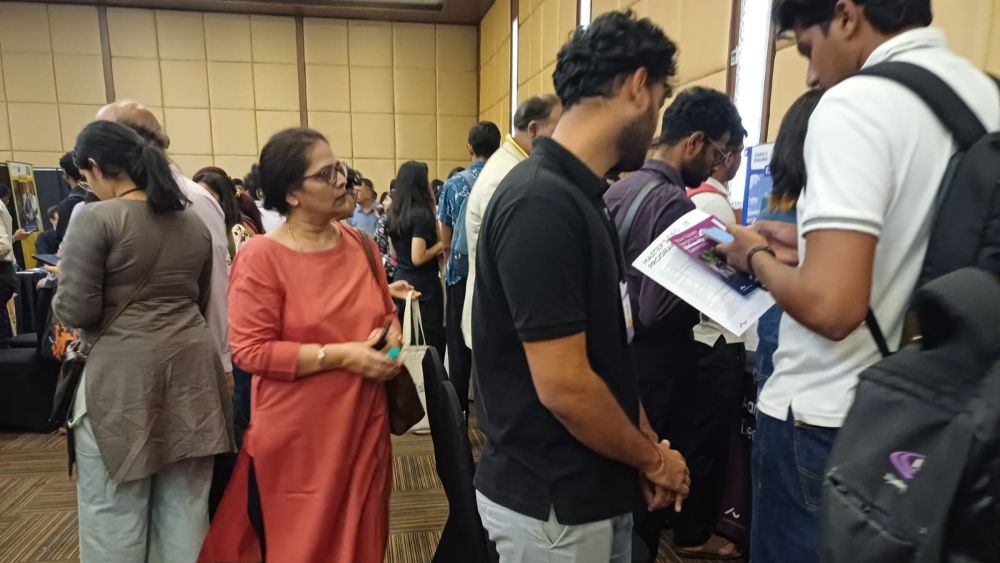
At the same time, India is strengthening its global relevance through research collaboration. Initiatives such as SPARC enable joint projects with top-ranked universities, encouraging mobility of both faculty and students and fostering a model of “brain circulation” rather than one-way migration. Targeted partnerships in strategic sectors—from semiconductors to digital technologies—further integrate India into global innovation networks.
India’s engagement with Horizon Europe reflects its ambition to integrate more deeply into global research ecosystems. Following the 2026 EU–India Summit, exploratory talks have begun on India’s potential association with the programme, which would represent the closest form of research cooperation with the EU. While Indian researchers already participate in Horizon projects, association would significantly strengthen research collaboration.
Furthermore, India is expanding targeted bilateral funding instruments, including e.g. cooperation between the Department of Science and Technology (DST) and Business Finland. These schemes support joint research and innovation projects, co-funded by both sides. Such bilateral mechanisms complement larger frameworks by providing focused partnerships and strengthening innovation linkages between India and key European partners.
India’s internationalisation strategy is closely linked to trade and its geopolitical ambitions, particularly its effort to position itself as a leader of the Global South. Through platforms like BRICS and the G20, India pushes for more balanced global governance and greater inclusion of emerging economies, while simultaneously deepening cooperation with advanced partners. Its role in the Quad (with the US, Japan, and Australia) and growing ties with countries such as Australia and South Korea highlight a focus on technology, security, and innovation partnerships. This dual approach allows India to act both as a representative of developing countries and as a key player in high-tech alliances—reflecting a broader shift from simply participating in global development to actively shaping it.
Partnership with EU and separate bilateral partnerships with individual EU countries are getting more important and strategic part of Indian development targets. The EU–India Free Trade Agreement and at the same time discussed mobility partnership demonstrates how education and talent flows can be embedded within broader economic cooperation. By enabling easier movement for students and professionals, India’s position as a global talent hub can be strengthen and deepen its integration into international labour markets.
India’s strategy strives for balance, it engages multiple global partners while pursuing its own development priorities, from defence cooperation to investments. Education and science diplomacy are becoming tools not only of growth, but also of geopolitical positioning.
India is in transition, moving from being primarily a global supplier of talent to becoming a destination where knowledge and innovations are created, shared, and retained. In this transformation, the message is clear: India is no longer just sending its talents abroad or adopting technologies developed elsewhere—it is increasingly creating its own innovations. At the same time, it is building the capacity to attract global talent and partnerships. In doing so, India is shifting from participating in globalization to actively shaping global outcomes and emerging as an architect of it.
Liisa Toivonen
liisa.toivonen(at)gov.fi
Sources:
- NITI Aayog (2025). Internationalisation of Higher Education in India niti.gov.in
- Pame Armstrong, Indian ministry of Education, interview and Webinar presentation, 2026
- Government of India (NEP 2020). Internationalisation framework education.gov.in
- India Science & Technology Portal. SPARC scheme
- NEP 2020 Higher Education India: Global Rise | AcademicJobs
- QS (2024). International branch campuses in India
- Leverage Edu (2025). Foreign universities in India
- India Science & Technology Portal. SPARC scheme
- Economic Times / Business Today (2026). EU–India FTA and mobility
- Times of India / Education Times (April 2026). Attracting foreign learners to India needs significant campus investments educationtimes.com
- QS / NITI-related datasets on inbound-outbound mobility immigrationworld.com
- Indian diaspora statistics (MEA / Statista) indiandiaspora.org