

Brazil’s Evolving Role in Global Science: Partnerships, Priorities, and New Directions
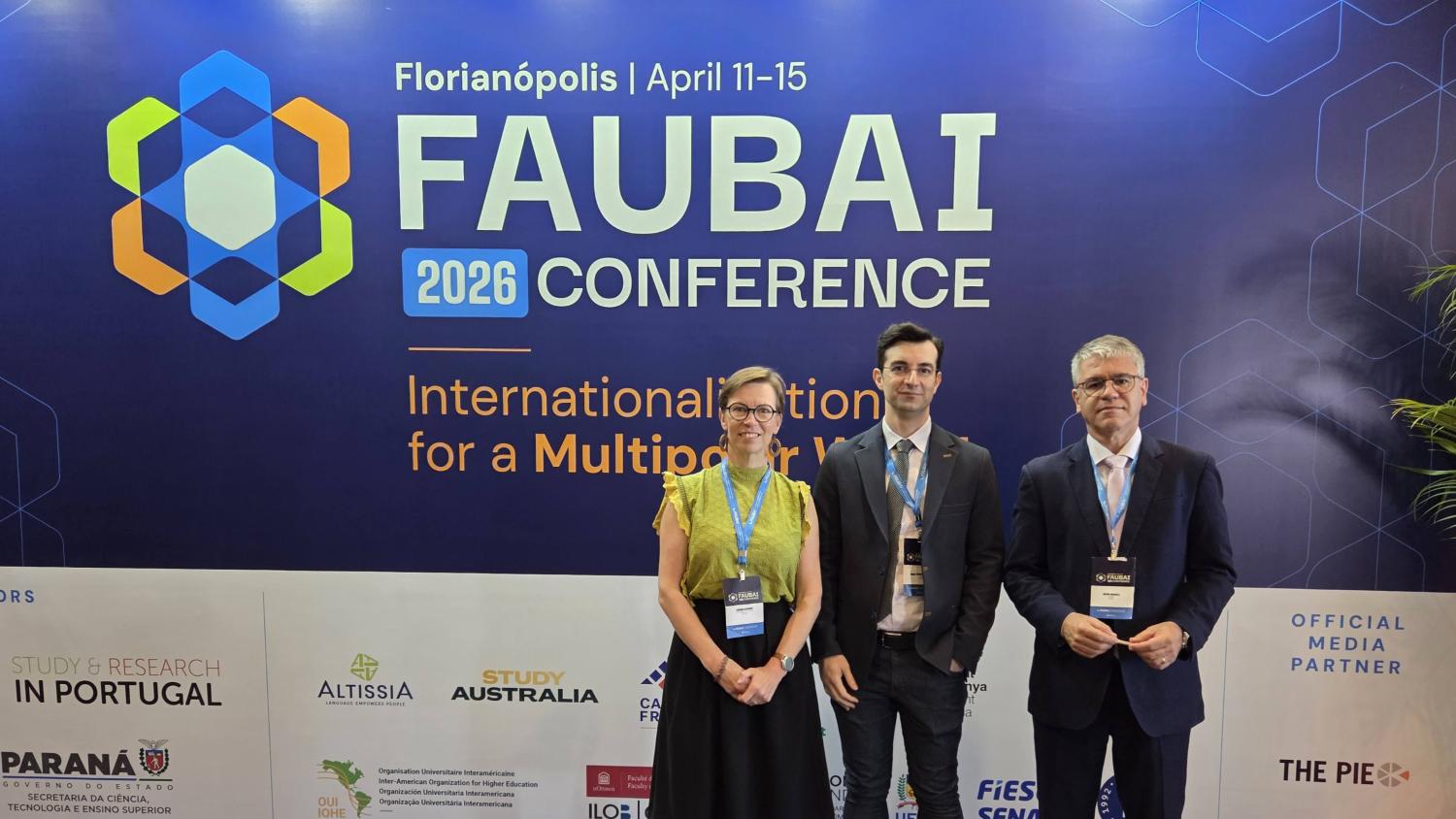
Brazil is seeking to strengthen its global role and competitiveness. Brazil's international research cooperation has traditionally been concentrated in the United States and Europe, but efforts are being made to diversify the geographical and thematic focus in order to increase balance, visibility and autonomy. More balanced internationalization is also promoted in higher education, where initiatives aim to support less internationalized Brazilian universities and to attract international students and researchers. Brazil is advancing its international higher education, research and innovation amid geopolitical pressures navigating opportunities offered by the EU, North America and the BRICS countries.
The state of internationalization of science in Brazil
According to the Brazilian Observatory for Science, Technology and Innovation (OCTI), 36% of Brazil’s scientific output involved international collaboration in 2019–2024, mainly with North America and Europe. The United States is by far the leading partner (14.2% in 2024), followed by Spain, Germany, France, Portugal, and Italy. Collaboration with the U.S. is nearly five times greater than with China, Brazil’s 10th-ranked partner.
International cooperation is strongest in engineering, environmental sciences, ecology, physics, chemistry, and increasingly in IT and materials science. However, high-impact collaboration often focuses on niche areas with limited national strategic relevance. For example, education sciences have strong domestic output but little international cooperation. Notably, collaborations with China appear to yield higher scientific impact than those with the U.S. OCTI recommends diversifying both geographic and thematic partnerships to improve balance, visibility, and autonomy, alongside stronger support for high-impact sectors and participation in excellence networks.
Internationalization of higher education and research under new conditions
Brazil, like Finland, aims to raise the level of education of its population and to increase the number of doctoral degrees and innovations. The government is implementing various measures to attract more young Brazilians to higher education, but also Brazilian researchers to return and stay in the country. Overall, Brazil is striving to increase its competitiveness in global science and higher education. No longer by sending young people to study whole degrees abroad, but through more balanced internationalization, including domestic internationalization, for instance, by developing English-language teaching offerings. Brazil is also attracting international talent, particularly from Latin America, through scholarships.
A key initiative for postgraduate internationalization is CAPES Global.edu, which also aims to reduce regional disparities in internationalization. With a €55 million annual budget (2026–2031), it funds 33 university networks involving 112 Brazilian institutions. Activities include doctoral students and researcher mobility, international events, staff training and missions. Thematically the networks focus for instance on health, biotechnology, sustainability, innovations, entrepreneurship, public policies, education, connectivity, food security and biomes.
Also, Artificial Intelligence (AI) is becoming ever more important strategic area for international cooperation for Brazil. Brazil’s national AI plan allocates approximately €4 billion for 2024–2028. Brazil is also striving to become a global leader in the field of green data centers.
Collaboration between EU and Brazil
The EU–Mercosur agreement could significantly strengthen EU–Brazil ties. Brazil is increasingly aligning with Europe in science, technology, and digitalization, with particular interest in AI governance and platform regulation.
Cooperation is expanding through initiatives such as the EU–LAC Supercomputing Network (launched in October 2025), which links high-performance computing infrastructures, enhances expertise, and supports joint research and innovation. Key application areas include drug development, climate modeling, and AI. The initiative also promotes use of the BELLA transatlantic data cable. It is funded with €4 million from the EU side and about €8 million from Brazil, with Finland participating via EuroHPC.
Brazil’s collaboration in the frame of BRICS
Brazil is actively promoting its higher education and research cooperation among the BRICS countries. In 2025 the BRICS Network University (NU) was expanded to include not only the original members - Brazil, Russia, India, China and South America - but also the new BRICS countries, Egypt, Iran and the United Arab Emirates. Brazil increased the number of its member universities from 12 to 20 and in total, the network now includes 137 universities. The network aims to promote joint research, academic mobility and innovative educational programs in areas of common thematic interest.
The range of cooperation themes was also expanded from the original focus areas of computer science and information security; BRICS research; energy; ecology and climate change; water resources and pollution control; and economics. New topics include health sciences; mathematics; natural sciences; social sciences and humanities; and sustainable agriculture and food security. Brazil is represented in all 12 thematic groups.
Brazil wants to present the BRICS NU as “only one new cooperation opportunity, and not a replacement for existing partnerships”, i.e. the network is not intended to hinder other international initiatives. Brazil is also mainly careful to mention cooperation with Russia.
Topical discussions in FAUBAI 2026
The annual FAUBAI conference provides a timely overview of key developments in the internationalization of Brazilian higher education. In April 2026, in total 773 conference participants, mainly representatives of universities’ international offices and internationalization networks from all over Brazil and abroad, gathered in Florianopolis for FAUBAI 2026.
The programme addressed several pressing themes. A representative of Aalto University took part in a panel discussion on European and Brazilian funding programmes and strategies for building multilateral networks. We also organized a session to discuss Finnish initiatives for internationalization, presenting examples of reciprocal cooperation and the development of future-oriented skills and competencies between Finland and Brazil.
In his keynote, CAPES’s head of international affairs, highlighted the need for consistent and reciprocal science diplomacy to respond to global challenges. He warned about science diplomacy turning into transaction steered by mere commercial interests. He was also concerned about higher income countries dictating the terms of collaboration that may exploit the lower income partners. It was noted that in BRICS NU, Brazil was finally respected and listened as a country that produces and finances science, who could also participate in defining the joint research priorities.
In other plenaries, panels with representatives of a great variety of global and Latin American university networks and associations discussed their role in an increasingly multipolar world, and the demands for rethinking of internationalization at a time when multilateralism is under unprecedented pressure. It was clear that universities need to keep with their three missions when going through the changes, and also increasingly focus on the societal interaction to win back the public opinion. The focus also needs to be on the development of critical thinking and finding solutions for global challenges. When addressing the dilemma between competition and collaboration, it was highlighted that the universities can become more competitive by collaboration and have greater local impact through global collaboration.
It was also highlighted that with their current science policy, Brazil is a reference in the LAC region. When highlighting Brazil’s growingly important role in global science, it was interestingly put that “Brazil realized that if you are not sitting in the table, you are on the menu”.
Johanna Kivimäki
johanna.kivimaki(at)gov.fi
Sources:
- BRICS (May 2025.) The BRICS Network University includes 20 Brazilian institutions.
- CAPES (May 2025.) Vinte instituições estão pré-qualificadas para Rede BRICS-NU.
- CAPES (April 2026). List of CAPES Global.edu networks.
- Global Gateway Forum (10.10.2025.) New supercomputing network for artificial intelligence powers innovation across Europe, Latin America and the Caribbean.