Vision for Finnish comprehensive schools 2045
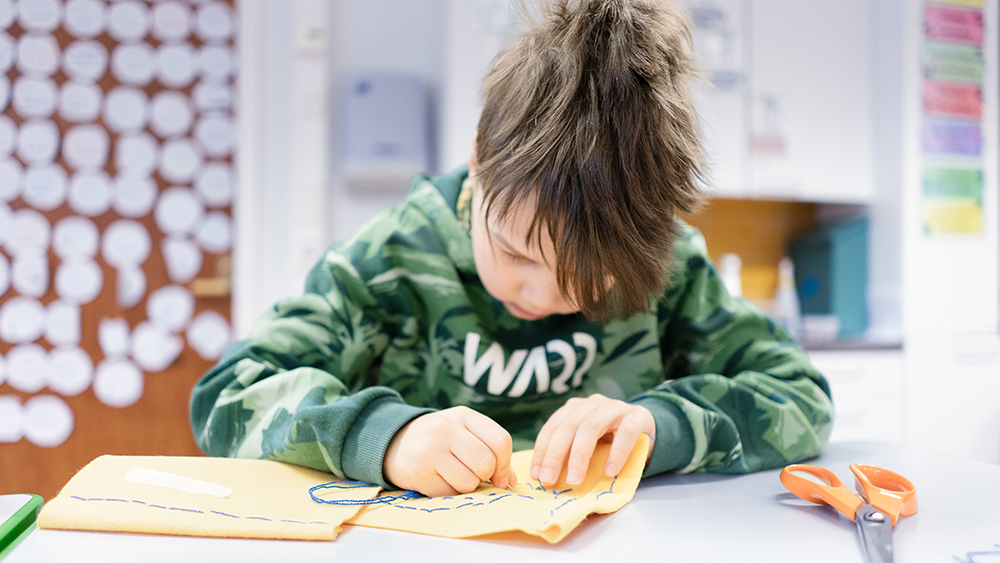
Under the leadership of the Ministry of Education and Culture, a vision for the comprehensive school of the future has been drawn up. Comprehensive Schools 2045: The vision for life estimates that with accelerating technological advances, an ecological crisis and social segregation, the core function of education is being challenged. Schools are not only expected to prepare young people for future changes but also equip them for life and enable them to change the world. The vision was published in Helsinki on 11 February 2026.
This work is based on the Programme of Prime Minister Petteri Orpo's Government. The aim is that schoolchildren learn to learn, act democratically and build hope in a world of uncertainty.
The task of comprehensive schools is to increase competence and the willingness to use knowledge to advance the common good. Sound knowledge and basic skills are combined with ethical, social and flexible thinking skills, as well as the ability to guide one’s own learning.
Wellbeing as a foundation and result of learning
Learning and wellbeing are linked more strongly than before. Wellbeing is a prerequisite for learning and learning increases wellbeing. Wellbeing is understood as both communal and individual. The aim is the psychological, social and physical wellbeing of the entire school community, which also sustains schoolchildren’s wellbeing. A safe and thriving school is a place where one can fail safely, and where everyone’s success is celebrated.
Artificial intelligence and digital solutions support learning, but human thinking, empathy and ethical considerations remain at the core of the school. Technology can be used to deepen human interaction and to enable better guidance, learning that is more equal, and knowledge-based leadership.
Schools form deeper cooperation with families and other actors.
Systematically led educational partnership by schools with families makes it easier for schools to carry out their pedagogical mission. By working collaboratively, schools can also receive support from local communities and strengthen equality among schoolchildren by supporting families in their educational role.
Cooperation between schools and families also assists and supports those whose parents or other guardians cannot, for one reason or another, actively engage in supporting their child's school attendance.
The vision also sees schools as a meeting place for communities. Schools play a regional role in strengthening a spirit of community, where schoolchildren have opportunities to take part in recreational activities.
Minister of Education Anders Adlercreutz emphasises that the comprehensive school of the future is not only a place for learning but also the most important institution for the future of society.
“The vision highlights the holistic development and growth of children. There is no need to reinvent comprehensive school, but it needs to be updated to meet today's requirements and challenges. The vision takes a strong stand on the fact that, in the midst of the changed operating environment, there is an increasing demand to reinforce not only basic skills but also our ability to work together. These changes are guided by bildung, hope, agency and our common good,” the Minister of Education said.
- Basic Education 2045: For Life : A Vision for Finnish Comprehensive Schools -report
- Futures work in comprehensive schools
- Photos of the event in Flickr
The vision was prepared in 2024–2025 and draws on the views of more than 5,000 people in Finland and on Finnish and international research. It offers a way to develop education in our rapidly changing world. The aim of the vision is that Finnish comprehensive schools will remain one of the best in the world – a place where we grow into bildung, meaningful life and a common future that is built together.
Inquiries:
Venla Bernelius, Senior Specialist, tel. +358 295 330 339
Tommi Karjalainen, Senior Ministerial Adviser, Ministry of Education and Culture, tel. +358 295 330 140