

South-East Asia – Singapore
 The Team Finland Knowledge specialist in Singapore works across South-East Asia. Besides Singapore, the main focus is on Malaysia, Thailand, Vietnam, the Philippines and Indonesia. As the countries in the region differ in their political and economic systems, the Team Finland Knowledge emphasis varies from country to country. Singapore is the region’s leading centre for science and innovation. Work there focuses on advanced research, higher vocational education and training, and innovation partnerships. In the other countries, the main themes are improving teacher education and developing vocational education and training. Other key areas include maintaining joint degree programmes and attracting students. Team Finland Knowledge reports and newsletters share news on reforms in the region.
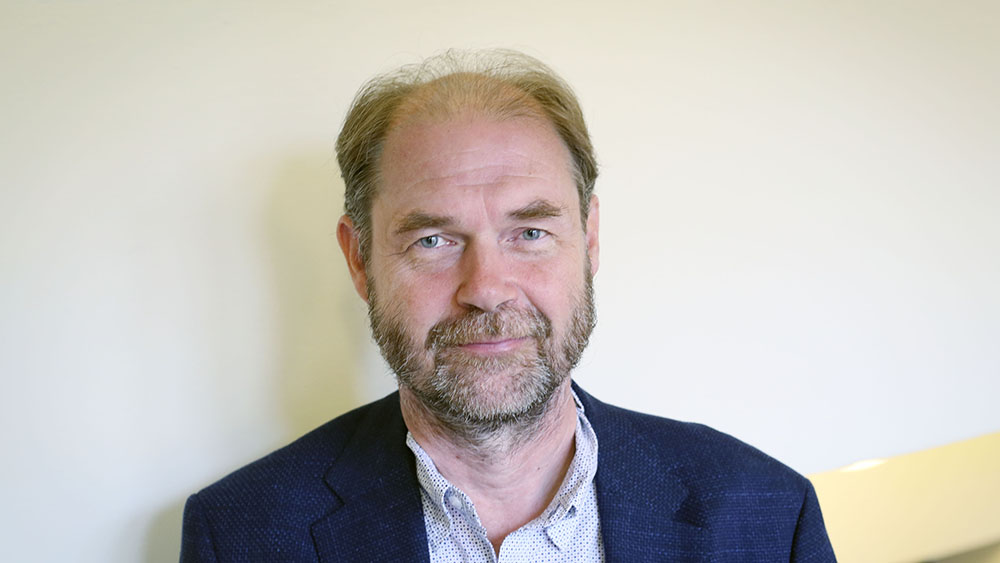
Before joining Team Finland Knowledge, Mika Tirronen worked at the Research Council of Finland as a Programme Manager and served on steering groups in several ERA‑Net funding networks. He has spent twelve years in Asia (China, India and South-East Asia) working as a senior specialist. Mika Tirronen holds a doctorate in molecular developmental genetics, and he has worked as a researcher at the University of Helsinki and at the European Molecular Biology Laboratory in Heidelberg.
mika.tirronen(a)gov.fi
+65 9754 0712
Mika Tirronen on LinkedIn
Embassy in Singapore on LinkedIn
Singapore at the forefront of research and innovation
Singapore has rapidly become one of the leading countries in artificial intelligence, semiconductors and other emerging technologies. It also ranks among the world’s strongest innovation ecosystems (GII 5th) and capital markets (GFCI 3–4). Its universities actively recruit rectors and researchers from Europe and North America. They also work closely with international companies to build innovation links. NUS and NTU are joint 3rd in the QS ranking for Asia. Globally, NUS is 8th and NTU 12th. Singapore also has five other autonomous universities and several strong vocational education and training organisations.
Singapore offers promising opportunities for cooperation in advanced research. Key fields include artificial intelligence, semiconductors, materials sciences, biomedicine and energy research. There are also interesting opportunities in developing higher vocational education and training. Singapore’s association with Horizon Europe will bring it closer to EU Member States. It already has deep strategic partnerships with the largest Member States. In recent years, the Nordic countries have been important partners, especially in the green transition, innovation and cooperation with startups. Singapore is also one of the most popular exchange destinations for Finnish students. Finland is well known in Singapore's research and innovation community.
Opportunities elsewhere in South-East Asia
Malaysia and Thailand stand out with strong universities in both the public and private sectors. In these countries, universities run by industrial groups are flexible partners with ambitious sustainability goals. The ministries of education in both countries stay in close contact with Finland as they look for expertise for their development projects. Indonesia also has strong public universities. Many of them have expressed interest in working with Finnish partners.
Vietnam is carrying out education reforms to build its innovation capacity. Quality in education and research, private sector development, startups and entrepreneurship all play a key role. Finland is valued as a long-term development cooperation partner, and it is one of the main partners in putting the reforms into practice. During Party General Secretary To Lam’s visit to Finland in late 2025, the two countries signed a strategic partnership agreement.
The Philippines has long been one of the largest sources of labour migration to Finland. It also sends more students to Finnish upper secondary education than the other countries in the region. The Philippines has significant potential for more cooperation in higher education and for developing vocational education and training. The Department of Migrant Workers in the Philippines is a partner organisation of the Finnish Ministry of Economic Affairs and Employment. It is keen to develop and coordinate labour migration and the additional training linked to it.